- · Classroom Based Research for Professional Development
- · Design Thinking
- · Developing Intercultural Competence Through the Use of Online Resources
- · DIY Online Assessment
- · EVO Minecraft MOOC 2017
- · EVO ViLLAGE 2017
- · Experiential Learning
- · Flipped Learning
- · ICT4ELT2017
- · Moodle 4 Teachers
- · Non-native English Speakers in TESOL
- · QR Codes in Action
- · Teaching Listening: Principles, Techniques, and Technologies
- · Teaching Pronunciation Differently
- · Techno-CLIL
- · TEFL2YL
Monday, January 2, 2017
You’re invited to the Electronic Village Online Session on Flipped Learning!
Thursday, November 3, 2016
Flipping my EFL classroom at ÚNICA
So, in order to optimize the time and space in my EFL course I decided to take explicit grammar instruction outside of the classroom by creating and assigning peer instruction videos to students (A post on this particular topic coming soon). In EFL contexts, time is usually spent going over grammar minutia leaving little room for language use and spontaneous production. So, what I did was to "get rid of" the grammar in the classroom and free up the space for experiential and active learning.
Unit two dealt with storytelling. The book invited students to think about different aspects of storytelling and to "write a story" as part of the unit's contents. The supporting grammar structure for this unit was a review of past tenses. However, I wanted to take the unit a bit further and added a task: creating a story on Storybird (thanks @martharamirezco for the suggestion).
In the interest of working in a flipped fashion, I had students read stories for homework to discuss their features in class. They did. We then worked on the grammar structure though a video and students started thinking about the topic they wanted for their story. We went to our computer lab to work on the pictures provided by Storybird. That's when we ran into our first roadblock. The internet connection was dreadful and students could not easily browse the site to find the images they wanted for their story. If you know storybird, you might be aware of the richness in imagery offered by this site. That's why I thought of working with the images first and then on building the story from the images chosen, but it didn't work quite well that day due to the internet glitches. Anyway, students prepared their story at home and posted them to our class website (Coursesites).
Here you have a couple of samples of students' finished products (stories shared with permission from the students):
1. A very tough life
2. Where fear ends
3. The tree of my life
Unit 4 was about art, in general, but I emphasized on street art, hip-hop, rap, graffiti and related topics. My students live in backgrounds where walls are plagued with graffiti and murals, thus, this was a very meaningful topic for them. The class project was to create a street art video presentation. We had one class session for walking around the downtown area taking pictures of murals and graffiti on the walls. Students later used Power Point combined with Screencast-o-matic to create their videos and shared them with us in the class site.
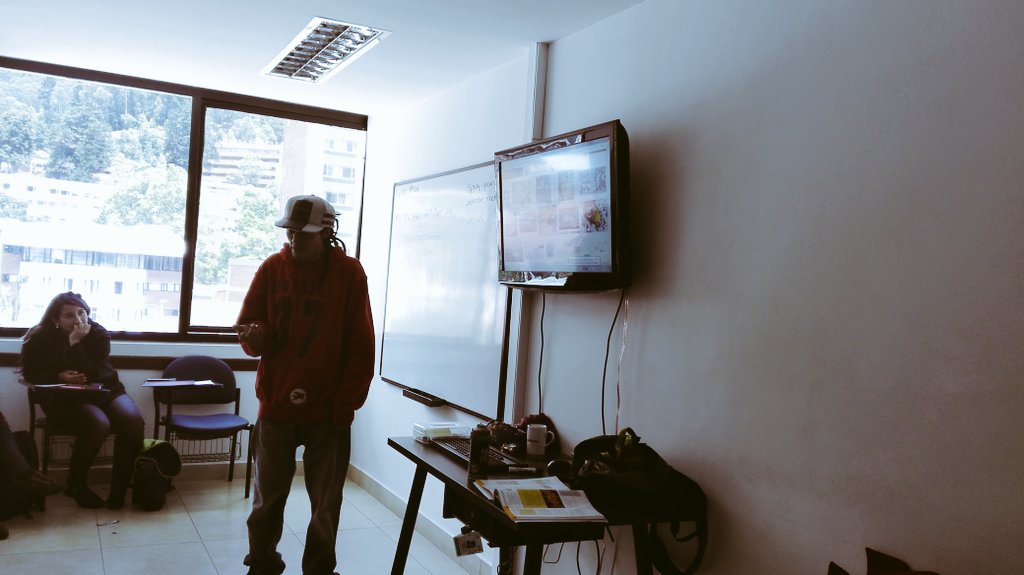
What made this workshop flipped was that because of the freed class time and space we had, I had the opportunity of bringing a real muralist to our clas to talk to my students. Kaleto Taki, a local street artist came to my class to talk to my students about his painting techniques, his inspiration and the materials he uses.
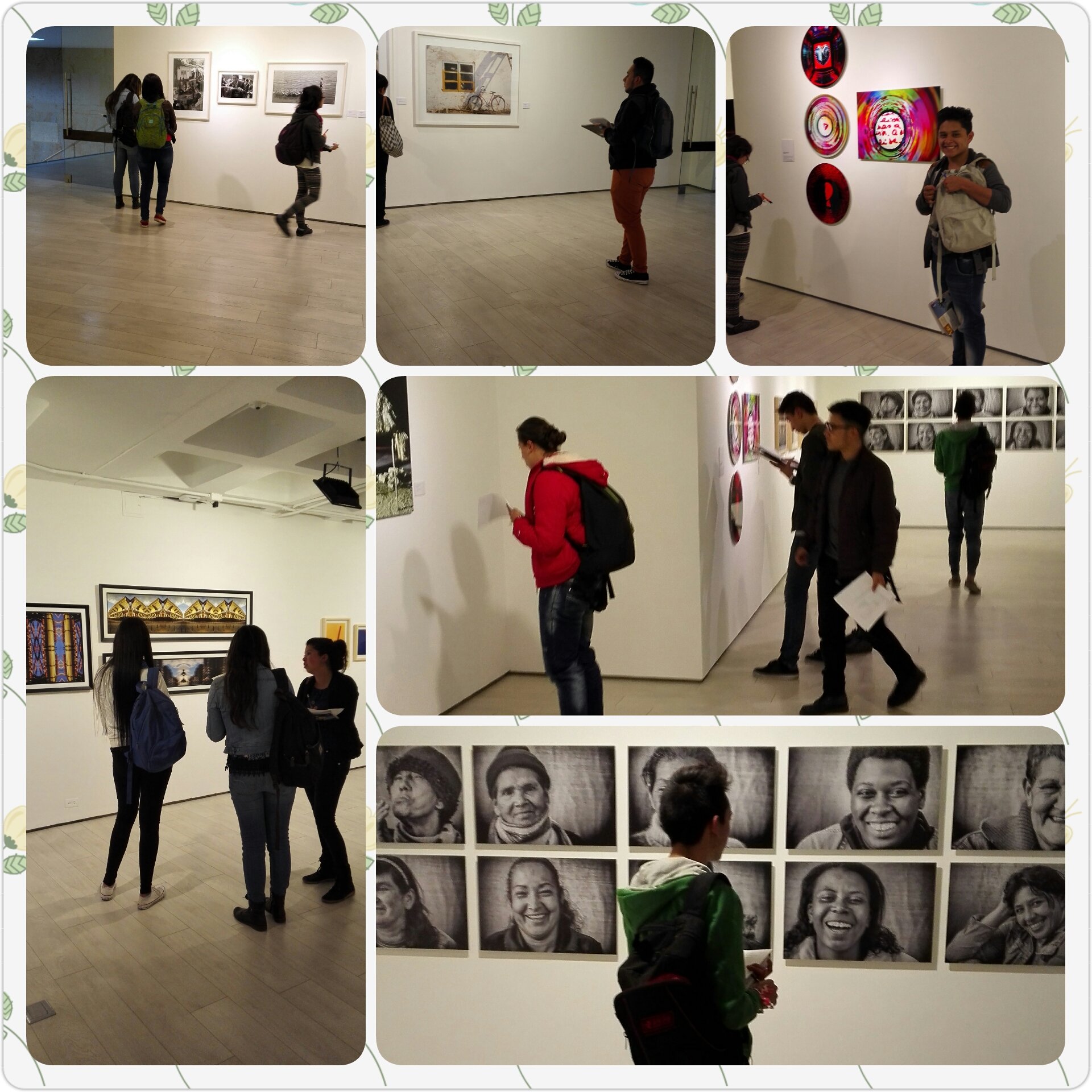
We also had time to go to the Centro Colombo Americano Art Gallery, where my students had the opportunity to see a local photographer exhibit (for many of my students, this was their first visit to an art gallery ever).
Saturday, October 15, 2016
Research belongs to researchers regardless of their work context
Teachers at Abraham Lincoln School are working on Flipped Classrooms in Math classes, Digital Citizenship, Using Clickers, Using multiple Web 2.0 tools (Classcraft, Classdojo, Mindmap, Bubbl.us, Goconqr, Chamilo LMS, Kahoot, Padlet, Wikispaces, MyEnglishLab, Video maker, Camtasia, etc --the list is long), they are also documenting the work and presenting it in academic events along the country.
I have no affiliation to Abraham Lincoln school or Professor Monguí, I just think as a Colombian teacher technologist engaged in the use of information and communication technologies in the classroom, I have to recognize the work of colleagues who are pursuing the same goal. Professor Monguí inspires me because she is working at a school, making a huge difference in a group of teachers and students and helping them grow and inserting the school in the discussion around technology that is happening mostly among Universities in the world. It is admirable how she would do all this from her school classroom and position.
In Colombia, research normally happens in Universities or it is somehow controlled by Universities (through MA and undergraduate thesis projects), but to see such a robust research group created and functioning merely within and for the school is rare. That is why I have decided to write this post, because I think it si a great and brave idea. Situating research in the school setting would really make a difference in our country's education.
We need more people like professor Monguí!
Tuesday, August 9, 2016
UNICA: Where the magic happens!
I can summarize the experience I've had these days with the image below... I had seen it many times, but it had never proven so true to me as now. Right now, I feel I'm in the zone where magic is supposed to happen.
Another aspect that has challenged me these days and has made me reflect is my love for active learning and the need to make my classes different every day. As a flipped learning enthusiast, I can't conceive classes where students are not active at all times, and where I'm not the "guide on the side". That's pretty easy to do when you have only 4 classes a semester. However, now that I have class every day, it is not that simple! I have struggled to plan my classes and make them active, student centered, energetic, and on top of that, to create the videos that have to go with my lessons. I have had to start to think differently, and to use different resources (other than videos) to give instruction to my students. I have had to reinvent myself in order to flip. I have been talking the talk for some years now, and now it is time to walk the walk.
I'm not complaining, don't get me wrong. I'm just saying that now I can really say I'm flipping! And now I appreciate the work of my fellow flippers in the world much more. Aaron Sams, Jon Bergmann, Crystal Kirch, Ken Bauer, Kate Baker, Brian Bennett, Laine Marshall, Robyn Brinks Lockwood and all the other flippers I have heard of or read about are really amazing! It takes a lot of planning and hard work to pull this off on a daily basis. Crystal Kirch's book, Flipping with Kirch, has been a great tool to stay focused and motivated through these harsh days. Reading her book has inspired me to write this post and the ones to come as a way to examine my own flipped learning/teaching practices and why not, come up with my own book!
Another challenge I have experienced these days is the lack of technology I'm facing. I mean, I have spent the last 9 years or so of my life learning how to teach with technology, but I hadn't devoted that much time to thinking about how to teach without it. Surprise! There are plenty of contexts where technology is not pervasive and where it is actually a luxury of a few, now I belong to one of those contexts. I've had to use my technology mindset to think outside the box and come up with solutions to my classes without the use of devices but still with lots of collaboration, cooperative work and active learning. I can now relate closely to my MA students, and tell them that all the things I said in class actually work, even though you don't have the resources! More posts to come about that aspect.
I have been tremendously challenged these weeks. I feel somewhat overwhelmed, but the feeling that all of what I'm experiencing will just energize my mind and make me come up with interesting ways to handle the difficulties I'm now going through is a motivation booster! I'm out of my comfort zone and I love it! Because as portrayed in the image I chose to illustrate this post, the magic happens outside of your comfort zone. I know I'm struggling now, but I know it is because I had already managed to live through the day with the certainty of what to do. Now that I don't know what's going to happen, or how I will make it happen, I feel uneasy. But energized!
Monday, July 25, 2016
I'm an active teacher/professor. Period.
Monday, July 11, 2016
Training foreign fellows to teach English in my country
Friday, May 20, 2016
Book review: 101ways to flip your online class
101 ways to flip your online class by Barbi Honeycutt, PhD and Sarah Glova was the last book I read. I thought of writing a post on it since it connects smoothly with the topics I talk so much about now: flipped learning and online learning.
The book is rather simple. The author presents 101 short and concise ideas of how to "flip" an online classroom. In this particular book, the flip is understood as a space where student engagement and involvement is at the essence.
The 101 ideas are simple but effective. I had personally tried most of them in my own courses. Creating welcome videos, appealing to the person, introducing IMing and creating a course syllabus scavenger hunt for students to find crucial information about the course are just a few of the 101 ideas mentioned in the book.
However, the activities are not completely explained. The author mentions them but doesn't give much detail as to how they could be set up and implemented (a flaw in my opinion, I would have liked more detail in some of the activities). If you want more of a cookbook full of recipes, this is not quite the book for you.
Anyway, the book makes you reflect on how to construct interactive spaces within the online classroom and gives you ideas as to how to connect to your online students satisfactorily. Besides, it is a tremendously fast read.
If you are an online instructor who feels blocked about what to do in your course and want to get some quick tips on how to engage students further, this book is a great point of departure. However, if you are more of a flipped learning expert, or a "curious" online instructor, this book might be too basic for you. Anyhow, it is worth reading. I assure you, you will find at least 5 new ideas to take to your online classroom as soon as possible.